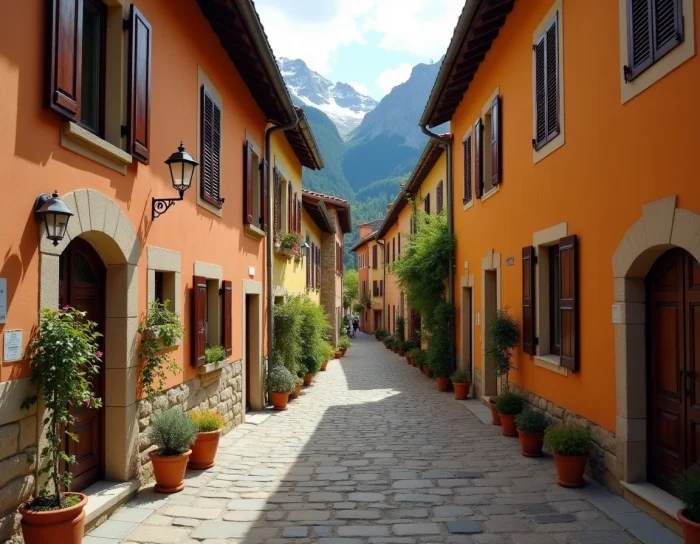
Veynes occupies a unique position in the Hautes-Alpes. Located in the middle valley of the Petit Buëch, between the Dévoluy massif and the Céüze massif, this municipality is primarily a crossroads, both railway and geographical, where train lines converge connecting Gap, Grenoble, and the Rhône valley. Its inhabitants, the Veynois, live in a town that lacks the notoriety of nearby ski resorts and the anonymity of an isolated mountain village.
Veynes, Alpine railway hub: a threatened heritage then revived
The Veynes train station is the defining feature of the municipality. Several lines converge here, making it a transit point between the Southern Alps and the Rhône valley. This railway crossroads function has shaped the local identity to the extent that an eco-museum dedicated to the Veynois railway worker preserves the memory of this activity.
The Grenoble-Gap line, which runs through Veynes, has gone through a period of uncertainty. Alerts about its possible closure due to obsolescence circulated in the regional press for several years, before financial commitments from the State and the Région Sud partially secured its future.
These decisions, made between 2020 and 2023 according to the deliberations of the Regional Council, have a direct impact on the accessibility of the municipality. Municipal information can be accessed at https://www.ville-veynes.fr/ to follow the evolution of these local issues.
More recently, tourist and event circulations have been revived on the lines converging towards Veynes. The association Autour du Train de Veynes, SNCF Voyageurs, and the Région Sud have been promoting special trains, historical trains, and even experimental night trains since 2022. Veynes is repositioning itself as a tourist railway hub, an angle that traditional travel guides have yet to mention.
Geography of the Buëch valley: what the relief imposes on Veynes
The municipality is situated in a gently sloping valley, conducive to agriculture but exposed to floods from the Petit Buëch and its tributaries (Béoux, Drouzet, Glaisette), all of which are subject to torrential flow. This detail is not trivial: it conditions urban planning, the location of buildable areas, and agricultural constraints.
The valley forms a northeast/southwest passage between the Gap basin and the Buëch valley. Beyond that, one can reach the Rhône valley via the Cabre pass or the Eygues valley. This natural corridor position explains why Veynes has always been a transit point, long before the arrival of the railway.
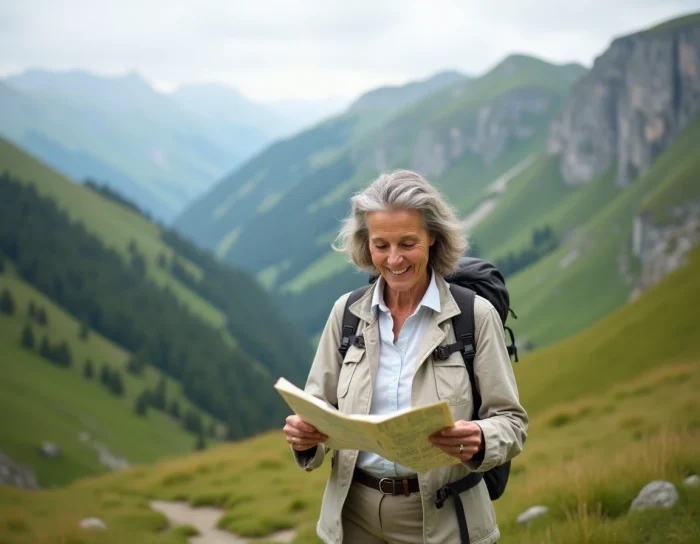
The Céüze massif dominates the municipality and attracts climbers and hikers. The Dévoluy, accessible from Veynes, offers a more alpine mountain terrain. Between these two ranges, the town remains at a moderate altitude, giving it a transitional climate between Provençal influence and alpine severity.
Activities around Veynes: hiking, white water, and heritage
The range of activities around Veynes is structured around three axes that reflect the diversity of the territory.
- Hiking trails start directly from the municipality or nearby villages (Montmaur, La Roche-des-Arnauds, Le Saix, Furmeyer). The routes ascend towards the ridges of the Dévoluy or follow the Buëch valley, with varying levels of difficulty.
- Water-related activities benefit from the Buëch and its tributaries. The torrential flow of the rivers, a constraint for agriculture, becomes an asset for white water sports in season.
- The built and museographic heritage includes the eco-museum of the Veynois railway worker and the museum of costumes and trades of yesteryear, two places that document past local life without seeking the spectacular.
The tourist office of the Sources du Buëch covers Veynes and the surrounding municipalities. It coordinates information on accommodations, marked trails, and seasonal events.
Grenoble-Gap line and accessibility: an ongoing question
The railway future of Veynes remains a subject of vigilance. While the renovation agreements signed between 2020 and 2023 have ruled out the scenario of a sudden closure, the renovation of the Grenoble-Gap line is gradual and not yet completed. Field reports vary on the actual pace of work and its impact on service schedules.
For a municipality whose identity partly relies on the railway, the quality of rail service conditions tourism, the settlement of new residents, and local economic activity. The tourist and historical trains revived in recent years provide occasional visibility, but do not replace a reliable regular service.
Meanwhile, road access via the Buëch valley remains the dominant mode of transport to reach Veynes from Gap or the Drôme. The municipality is located at the crossroads of several routes, which gives it a role as a gateway to the Dévoluy and the Queyras for visitors coming from the south.
Local life in Veynes: between alpine rurality and local services
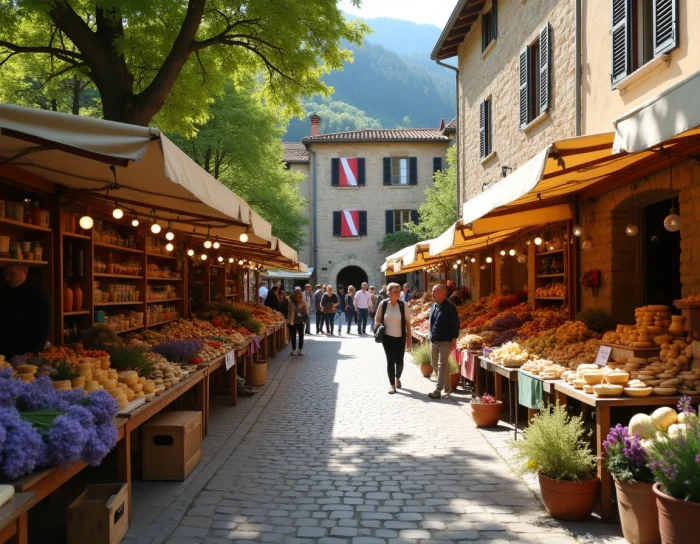
Veynes is not an isolated mountain village. The municipality has shops, public services, and schools that make it a local hub for surrounding municipalities. This central town function structures the daily lives of residents well beyond tourism.
The available data do not allow for precise conclusions about recent demographic trends, but the dynamics of the municipality largely depend on the ability to maintain its services and rail accessibility. The natural heritage (massifs, valley, rivers) constitutes a permanent asset, provided that transport infrastructures keep pace.
Veynes remains a discreet anchor point in the Hautes-Alpes, a town where geography and the railway have written history together, and where the future is played out as much on the railway tracks as on the mountain trails.