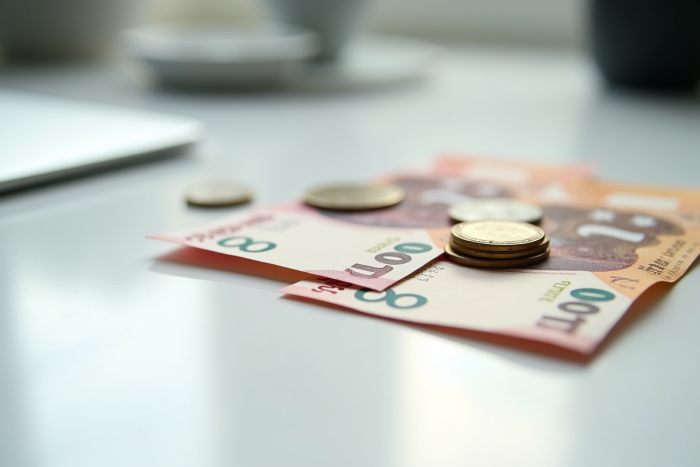
One euro is never exchanged at the same price against the dollar depending on the time, place, or intermediary. Some countries maintain their currency at a fixed rate, while others let it fluctuate freely under market pressure. Billions of transactions continuously modify the relative value of currencies.
The determination of exchange rates follows complex mechanisms involving political decisions, interventions by central banks, and speculation. These variations directly influence the cost of imports, travel abroad, or international investments.
How is the value of a foreign currency formed? The mechanisms behind the exchange rate
Behind every exchange rate lies a powerful dynamic: the shifting balance between supply and demand in the currency market. In this arena, central banks, investment funds, companies, and individuals clash. If the demand for the euro explodes, for investment or purchasing European goods, its value rises against the dollar. Conversely, an avalanche of sales causes its value to plummet.
The value of a currency is not just a simple market game. The exchange regime adopted by each state also plays a significant role. Some, like the eurozone, let their currency float: the price evolves freely according to exchanges. Others, particularly in certain regions of Asia, prefer to lock everything down and peg their currency to a reference, often the US dollar. The central bank monitors and does not hesitate to intervene, buying or selling currencies to maintain the targeted balance.
Another significant lever: the interest rate. A high rate attracts foreign investors, who come to place their money, thus strengthening the local currency. Conversely, a strategy of low rates or monetary easing weakens that same currency. These daily adjustments shape the fluctuating face of exchange rates.
Let’s take a concrete situation: the conversion of 1 million wons into euros. This simple calculation relies on the current rate, but also on the chosen intermediary and the movements of global financial flows. One might think they are making a trivial transaction, but behind the displayed amount lies a complex mechanism, made up of anticipations, public strategies, and a multitude of transactions that together shape the real value of currencies.

Concrete impact of exchange rates on your international transactions and travel
With every payment or international transfer, the exchange rate immediately determines the real value of your funds. Converting euros to dollars, making a purchase in pounds sterling during a business trip: everything depends on the rate applied by the institution you are dealing with. Banks, exchange offices, platforms: each takes its share through exchange fees or a commission hidden in the displayed rate. There is often a frequent gap between the rate shown on financial markets and the one offered to customers.
In every currency conversion, a marked-up rate comes into play: converting euros to dollars is never a neutral operation. At stake is a simple yet decisive question: how much does the operation actually cost once the margin is deducted? The differences between the interbank rate and the rate practiced at the counter affect the purchasing power, both for the traveler and for the exporting company. These fluctuations influence the cost of imports, inflation, or the profitability of companies focused on international markets.
Here are some situations where these variations manifest concretely:
- A traveler in France who needs to pay a bill in US dollars immediately sees their budget impacted by the applied rate.
- An exporter billing in euros may incur a net loss if the exchange rate shifts between the order and payment.
- The bank exchange rate never quite matches the market exchange rate: each intermediary incorporates its own costs, altering the final amount received or paid.
When the European Central Bank adjusts its rates, it influences the euro-dollar parity, which weighs on every transaction made beyond borders. In this shifting context, every currency conversion becomes a discreet challenge where vigilance remains the safest ally to preserve the value of one’s money.