
A bottle with the word “natural” printed in green doesn’t guarantee much. Between synthetic fragrances hidden behind reassuring labels and genuinely effective raw ingredients, sorting the good from the bad takes a little know-how. Choosing natural products for your home starts with learning to read ingredient lists, then being willing to cut down on the number of bottles under the sink.
Terpenes and essential oils: when natural products pollute indoor air
Have you ever noticed the smell of pine or lavender lingering after cleaning? It often comes from terpenes, volatile molecules found in essential oils. These compounds are indeed plant-derived, but they react with ozone in the air and produce aldehydes that irritate the respiratory tract.
Anses recommends caution when using essential oils, particularly around children, pregnant women and people with asthma. A “100% natural” spray used in a poorly ventilated room can degrade air quality just as much as a conventionally fragranced product. Fragrance-free products remain the safest choice for indoor air.
In practice, opt for cleaners without added essential oils. If you want a pleasant scent, a few drops of white vinegar infused with citrus peels will do the trick, and the smell disappears as it dries. Specialist retailers such as terresdenvies.com offer ranges of unprocessed, fragrance-free products that follow this simple approach.
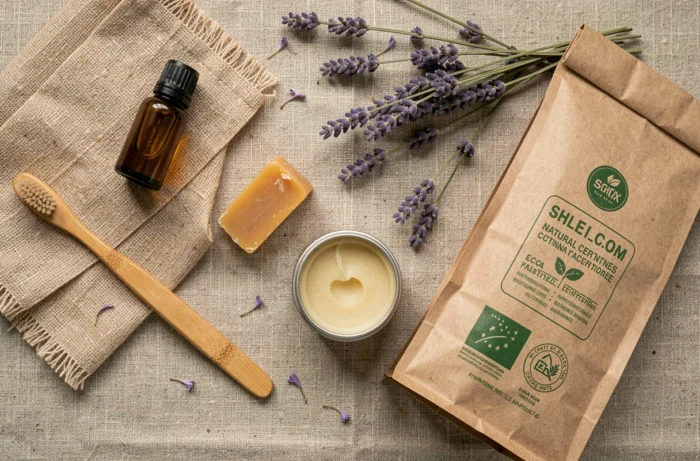
Ingredients in natural household cleaners: practical tips for reading labels
The ingredient lists on household cleaners are not subject to the same rules as food labels. Manufacturers are not required to disclose every ingredient down to the gram. Two simple habits can help you make sense of them.
Look for short ingredient lists
An effective all-purpose cleaner doesn’t need more than four or five ingredients. Water, a plant-based surfactant, baking soda, vinegar or black soap: these basics cover most household cleaning needs. The shorter the list, the easier it is to verify what’s in the product.
When a bottle lists fifteen ingredients, several of them with unpronounceable names, its “natural” claim deserves scrutiny. Synthetic preservatives, texturizing agents and colorants do nothing to improve cleaning power.
Look for reliable certifications
Certifications such as Ecocert, Nature et Progrès and the EU Ecolabel require compliance with standards verified by independent organizations. Among other things, they prohibit the most harmful volatile organic compounds and restrict synthetic fragrances. A verified third-party certification is more reliable than a manufacturer’s own claim.
Beware of claims such as “green,” “organic” or “eco-friendly” without an official logo: they carry no legal weight.
Homemade household cleaners: the precautions no one talks about
Making your own cleaners with white vinegar, baking soda and black soap reduces packaging and costs. This approach has genuine environmental benefits. But it also comes with practical risks that most online recipes fail to mention.
- Washing soda can severely irritate the eyes and skin. Wear gloves every time you use it, not just when preparing a mixture.
- Sodium percarbonate can cause serious eye damage. Handle it dry, and never leave loose powder near your face.
- Never mix vinegar with bleach: the chemical reaction releases chlorine gas, which can severely irritate the lungs even at low concentrations.
- Citric acid combined with bleach produces the same kind of dangerous gas.
These precautions don’t undermine the benefits of homemade products. They simply serve as a reminder that “natural” and “harmless” are not synonymous. Handling raw ingredients requires just as much care as using an industrial product.
Sustainable materials and furnishings: look beyond cleaning products
A healthier home isn’t just about what’s inside the bottles. Building materials, finishes and furniture also release chemicals for months after installation.
Paints, adhesives and varnishes are the main sources of volatile compounds in a new or renovated home. Choose products rated A+ on the regulatory indoor air emissions label, and check that they contain no added formaldehyde.
Particleboard made with urea-formaldehyde adhesives is still common in furniture. Alternatives are available: unfinished solid wood, low-emission OSB panels, and secondhand furniture that has already finished off-gassing. Secondhand furniture often has a better health profile than cheap new furniture.
Textiles and flooring
Synthetic carpets and some vinyl flooring trap allergens and emit volatile compounds. True linoleum, made from linseed oil, remains one of the healthiest flooring options. Don’t confuse it with the PVC “lino” sold in big-box stores, which has nothing in common with it but the name.
For textiles (curtains, bedding, covers), untreated natural fibers (linen, GOTS-certified organic cotton) limit exposure to flame retardants and reactive dyes.
Ventilate before you buy: the free step that makes all the difference
No product, however natural, can make up for inadequate ventilation. Opening the windows for ten minutes in the morning and evening refreshes indoor air more effectively than any air-purifying spray. Checking that your mechanical ventilation system is working properly once a year (dusting the vents and checking the airflow) is another cost-free way to keep up this habit.
Reducing sources of indoor pollution is more effective than dealing with them after the fact. Fewer products, clear ingredient lists, low-emission materials and regular ventilation all work together. The rest is often just marketing.