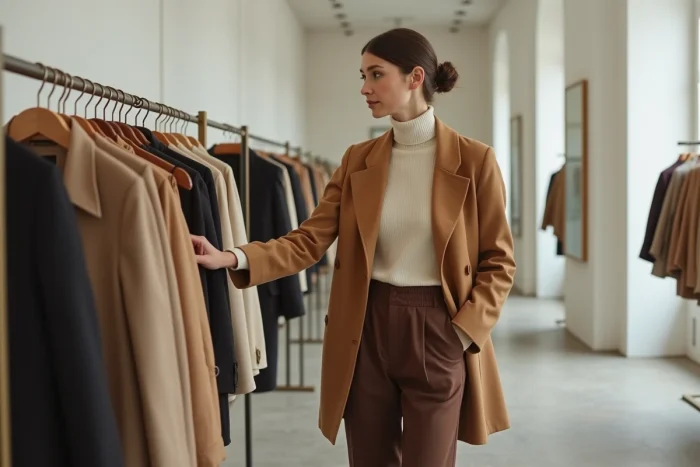
Fashion trends refer to the stylistic directions adopted by designers during fashion shows and picked up by the market over the seasons. For the current period, two seemingly contradictory movements coexist: luxurious minimalism with clean lines and a more demonstrative glamour, inherited from bold retro silhouettes. Understanding these currents allows for sustainable clothing choices rather than succumbing to impulsive purchases.
Quiet luxury and mob wife aesthetic: two opposing currents redefining style
According to the Pinterest Predicts 2025 report, searches for quiet luxury outfits and mob wife aesthetic are significantly increasing. These two aesthetics structure a large part of the looks spotted on visual platforms, but they follow inverse logics.
Quiet luxury focuses on sharp cuts, noble materials, and an almost total absence of visible logos. The result: outfits whose quality is perceived through touch and cut, not the label. The colors remain neutral (beige, gray, ecru, navy), with discreet accessories.
The mob wife aesthetic goes in the opposite direction. Furs (or imitations), leopard prints, bold jewelry, red lips: the reference is to an Italian-American glamour from the 1980s-1990s. This current reintroduces a theatrical dimension into everyday wardrobes.
To explore fashion trends on Renée Fashion, these two directions provide a good starting point to position one’s own balance between sobriety and exuberance.
The interest in this coexistence lies in the freedom it offers. Adopting one or the other current, or mixing them (an oversized neutral wool coat worn with XXL gold earrings), is a path that classic style guides do not explore enough.
Sustainable materials and modular capsules: fashion facing second-hand
The report The State of Fashion 2025, published by the Business of Fashion and McKinsey, documents a fundamental trend among 18-25 year-olds in Europe: the marked increase in second-hand and upcycling purchases. This generation is gradually moving away from pure fast fashion in favor of repairable or transformable pieces.
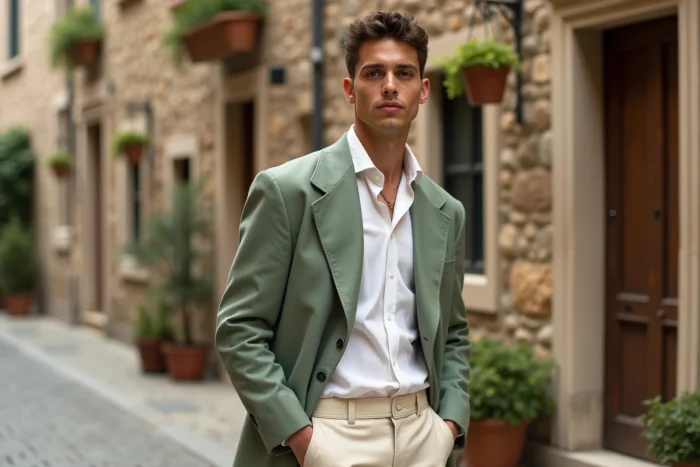
Several mid-market brands are repositioning their collections around modular capsules. The principle: to offer a limited number of pieces designed to be mixed and matched and last several seasons. A jacket with detachable sleeves, adjustable waist trousers, a reversible dress.
Three criteria to evaluate a modular piece
- Construction: reinforced seams, replaceable buttons, quality fastenings. A modular piece whose finishes fail after three washes misses its goal
- Real versatility: the piece must work in at least three different outfits without forcing combinations. A neutral blazer worn over jeans, a dress, or wide trousers meets this criterion
- Color coherence: modular capsules work when the shades remain compatible with each other, which excludes pieces too marked by a seasonal print
This shift towards sustainability is not limited to marketing discourse. The Ministry of Ecological Transition has launched an experimental environmental labeling system for textiles, with a progress report published in October 2024. The regulatory impact on style choices remains under-documented in mainstream content, even though it could change how brands present their collections.
Coordinated sets and seasonal colors: the pieces that structure a wardrobe
The Lyst Index 2024 reports a significant increase in searches for coordinated sets (matching top + bottom outfits). This fashion trend responds to a practical need: to reduce decision-making time in the morning while showcasing a polished look.
A coordinated set in linen or thick cotton works well in both casual professional settings and weekend outings. The key lies in the choice of fabric and cut. An outfit that is too fitted leans towards formal, while one that is too loose appears sloppy.
Color palette to remember this season
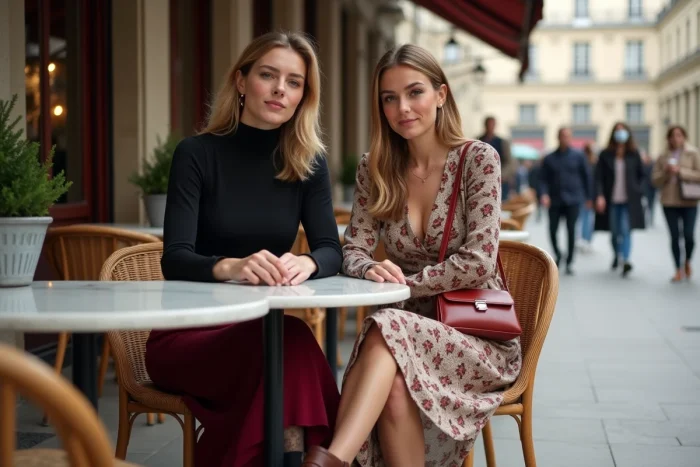
Pastel shades (sky blue, mint green, powder pink) remain very present on the spring-summer runways. Meanwhile, brighter hues like butter yellow or true red regularly reappear in fashion platform selections.
The choice of a seasonal color should not rely solely on trend. A shade that does not suit your complexion will work against you, regardless of its status on social media. The simplest test: hold the fabric under your face in natural light and observe whether your complexion looks brighter or duller.
Building a personal style beyond seasonal trends
Accumulating trendy pieces does not create a style. What distinguishes a functional wardrobe from a disparate collection is the ability to identify three or four personal axes and stick to them.
- Define a fixed ratio: for example, for each statement piece (bright color, unusual cut, bold print), have two neutral pieces that accompany it
- Invest in foundational basics: a well-cut pair of jeans, a dense fabric blazer, a versatile pair of shoes. These pieces absorb seasonal variations without losing their relevance
- Limit impulsive purchases dictated by an algorithm: visual platforms push for constant novelty, while most fashion trends return in cycles of a few years
The coexistence of quiet luxury and mob wife aesthetic shows that current fashion tolerates contradictions. Taking advantage of this latitude requires knowing your own benchmarks rather than following every micro-trend. A wardrobe composed of methodically chosen pieces can transcend the seasons without needing a complete overhaul each fall.