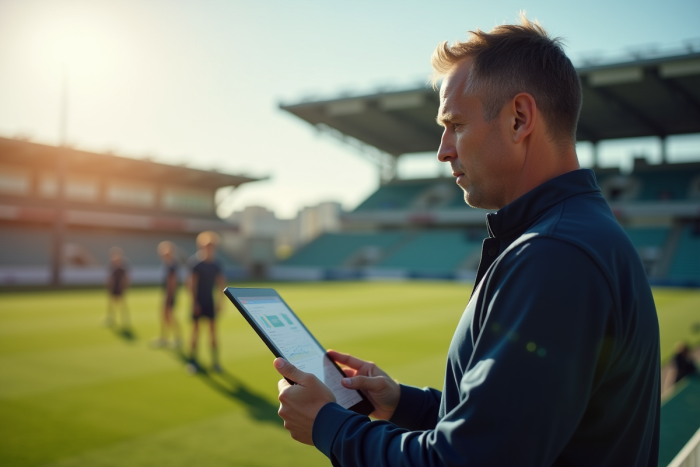
A decree, followed by a wave of figures. Since 2022, the French Rugby Federation has made a decision: each professional club must equip itself with platforms dedicated to data collection and analysis. Under this new framework, the management of player performance and health is organized around strict protocols, imposing unprecedented rigor on technical staff.
Engineers and data scientists, long confined to the shadows of the stands, are now at the heart of strategic decisions. Coaches draw on these resources to shape physical preparation, adjust their game plans in real-time, or prevent stoppages related to injuries.
Why statistics and artificial intelligence are redefining French rugby in 2024
The digital revolution no longer stops at server rooms or hyperactive start-ups. Now, every pass, every scrum, every run on the field generates a staggering amount of data processed in real-time. This new digital perspective changes the way coaches work, alters the relationship between players, staff, and management. Thanks to artificial intelligence and machine learning, it becomes possible to analyze thousands of variables, anticipate changes in the game, and devise tailored strategies for each opponent and context.
Specialized platforms, true data hubs, no longer limit themselves to compiling classic statistics. They cross-reference multiple sources: GPS data to track movements, biometric data to monitor physical condition, injury histories, and video sequences scrutinized in detail. This data integration opens the door to predictive analysis that influences both gameplay and roster management. Now, decisions are based on detailed visual reports accessible to both coaches and players themselves.
This transformation is not just for insiders. For enthusiasts and the curious, platforms like AllRugby reveal French rugby in a new light, making public indicators that were long reserved for experts. The sports industry is metamorphosing: fans want to understand everything, dissect tactics and coaching choices, while clubs adapt their strategies in light of big data. Between performance, science, and spectacle, the boundaries blur. Data imposes itself at every stage, guiding every risk-taking, every strategy, every quest for victory.

From data to decision-making: how science transforms player performance and health during major sporting events
The analysis of real-time data revolutionizes team preparation before each decisive match. Gone are the approximations of the past: sports science now permeates every step of training. During the Olympic Games or major competitions, staff rely on tools that combine video analysis, biometric sensors, and GPS feedback. These resources allow for adjustments to training programs based on the precise needs and profiles of each player.
The individualized approach, reinforced by predictive algorithms, allows for better anticipation of sports injuries. Weak signals of fatigue, microtraumas, and tendencies toward overcompensation become visible and actionable. Now, the focus extends beyond pure performance: player health occupies a central place, just like the optimization of performance during training or recovery phases.
Here are some examples of innovations that are concretely transforming practice on the field:
- Use of virtual reality and augmented reality to simulate complex game situations and prepare players for different scenarios.
- In-depth analysis using video tools: each sequence scrutinized to anticipate opposing strategies and refine collective patterns.
- Design of individualized training programs based on collected data, targeting specific areas for improvement for each athlete.
The valorization of data reshuffles the cards: preparation, workload management, injury prevention, everything becomes measurable, adjustable, optimizable. Doctors, analysts, and physical trainers move forward together, guided by objective indicators that transform daily routines into a quest for precision.
The blend of science and rugby is just beginning. On the fields, every data point counts, every decision relies on analysis. It’s impossible to know where this dynamic will stop: will the next breakthrough come from an algorithm or an unexpected move?