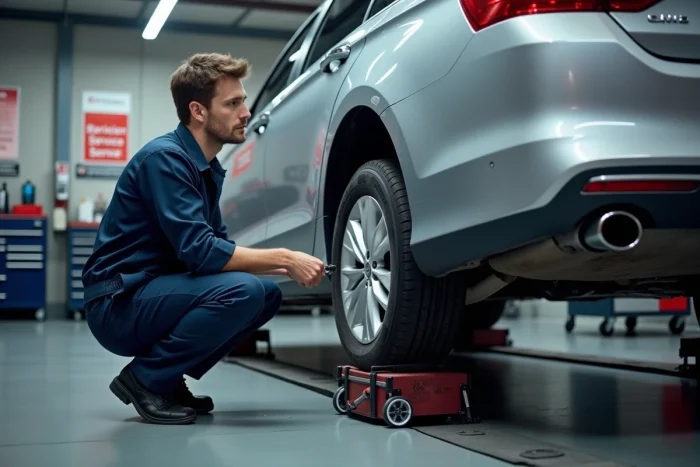
The maintenance of a car relies on a set of scheduled operations (oil change, filter replacement, brake check) whose timing varies according to mileage, the age of the vehicle, and the manufacturer’s recommendations. Entrusting these operations to professionals allows for adherence to this schedule without having to track it oneself, but not all service formats are equal.
Onboard diagnostics and telematics: what the vehicle communicates before a breakdown
Cars produced since the mid-2010s are equipped with an OBD port and, for newer models, a connected telematics module capable of transmitting wear data in real-time. Several garage networks utilize this data to send a personalized maintenance alert even before the warning light comes on the dashboard.
The concrete benefit is twofold. The garage prepares the parts in advance, which reduces the vehicle’s downtime. The motorist receives an estimated quote without having to travel, eliminating the element of surprise at the time of billing.
This approach remains unevenly deployed. Premium manufacturers often integrate it into their proprietary app, while independent networks rely on additional OBD devices. Before choosing a provider, checking if they offer connected tracking can save time on each intervention. Platforms like Gloria Net’s auto services gather various professional offers to more easily compare available services.

Subscription maintenance packages: smoothing the budget and forgetting the calendar
Since 2023, several manufacturers and garage networks have been offering subscription maintenance packages. The principle: a fixed monthly payment covers periodic maintenance, common wear parts, and sometimes roadside assistance or the loan of a replacement vehicle.
What a standard subscription covers
- Scheduled maintenance according to the manufacturer’s plan (oil change, filters, coolant), with automated appointment scheduling via the brand or network’s app.
- Replacement of wear parts at predictable intervals: brake pads, wiper blades, bulbs.
- A roadside assistance service in case of breakdown, including in some plans a replacement vehicle to minimize the impact on daily life.
The value of these subscriptions depends on the usage profile. A vehicle that drives a lot quickly justifies the plan, as maintenance intervals come up more frequently. For low annual mileage, the cumulative cost of the subscription may exceed that of occasional interventions paid for as needed.
Comparing the monthly subscription cost to the total maintenance bills over three years remains the most reliable method for making a decision. Manufacturers offering these plans typically publish an online simulator.
Digital maintenance log and vehicle history
The paper maintenance log, long the only record of interventions, is giving way to a centralized digital history. Several applications and fleet management platforms allow for recording each operation with the date, mileage, replaced parts, and provider.
This transition to digital offers a direct advantage when reselling. A complete and timestamped history reassures the buyer and can justify a higher selling price. For companies managing multiple vehicles, the digital history also helps identify the most costly models to maintain and adjust the fleet renewal policy.
What a good tracking tool should allow
- Manual or automatic entry of interventions, with possible import from the garage’s invoice.
- Maintenance reminders based on mileage or date, not just on a fixed calendar.
- An export of the complete history in PDF or printable format, useful for technical inspections or sales.
Professionals connected to these tools directly transmit the intervention report in the client’s app. This prevents losing an invoice and ensures that each operation is tracked.
Right to repair and data access: an evolving framework
At the European level, discussions around the right to repair and non-discriminatory access to data from connected vehicles are progressing. The goal is to allow independent garages to access the same technical information as manufacturer networks, in order to maintain effective competition in the maintenance market.
For the motorist, this regulatory evolution has a practical consequence: the choice of provider should no longer be constrained by technological lock-in. An independent garage with diagnostic data can offer the same level of service as a dealer, often at a different price.
This framework is not yet fully stabilized. Keeping track of the evolution of these rules helps determine if a change of provider is feasible without losing the manufacturer’s warranty, a point that remains a source of confusion for many owners.
Ultimately, the choice of a professional auto service rests on three verifiable criteria: the provider’s ability to utilize vehicle data, the transparency of the pricing model (flat rate or pay-per-service), and the complete traceability of each intervention in a digital history. Cross-referencing these three points before committing helps avoid most unpleasant surprises.