
At Basic-Fit, the minimum age for registration is set at 16 years. This limit, stated in the general terms and conditions of the brand, applies uniformly across the French network. Teenagers aged 16 and 17 can join, but only with written parental consent and the signature of a legal representative on the subscription contract. Below the age of 16, access is denied, even in the presence of an accompanying adult.
Civil liability and insurance: what really determines the age threshold in gyms
No French law sets a minimum age for accessing a private gym. The Sports Code regulates physical activities, the safety of equipment, and the qualifications of instructors, but remains silent on a minimum age for simply attending a fitness club.
The constraint comes from elsewhere. Gym operators are responsible under their obligation of result security towards their members. When a minor is injured on a weight machine, the chain of responsibility goes directly back to the operator, with more severe liabilities than for an adult. Insurers covering gyms incorporate this risk into their rates and contractual exclusions.
We observe that the question of minimum age at Basic Fit for minors primarily stems from these insurance arbitrations. Low-cost chains, which operate without permanent supervisory staff on the gym floor, calibrate their admission thresholds accordingly. The less human supervision there is, the higher the entry age tends to be.
The internal guidelines of each gym take precedence over the law in force, which explains the disparity between brands in the same geographical market.
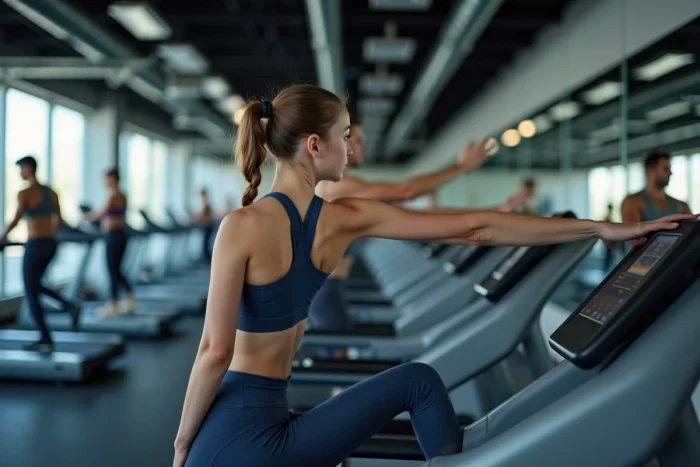
Basic-Fit, Nonstop Gym, Fitness Park: comparison of age thresholds by brand
Admission policies vary significantly from one chain to another, and even from one country to another for the same brand. Here are the thresholds practiced by the main networks accessible in France and in the French-speaking part of Switzerland.
| Brand | Minimum Age | Conditions for Minors |
|---|---|---|
| Basic-Fit (France) | 16 years | Parental consent required for 16-17 year olds |
| Basic-Fit (Belgium/Netherlands) | 15 years (recent) | Parental validation, independent access after registration |
| Nonstop Gym (Switzerland) | 16 years | Consent from legal representative |
| Fitness Park | 16 years | Written parental consent |
| Municipal/associative gyms | From 12-14 years depending on the case | Mandatory supervision, frequent dedicated time slots |
Basic-Fit has recently relaxed its conditions in Belgium and the Netherlands, allowing access from the age of 15 with targeted marketing campaigns aimed at teenagers. In France, the threshold remains at 16 years. No official relaxation has been announced for the French market to date.
Particular case of municipal and associative gyms
Public or associative structures often apply lower thresholds, sometimes from the age of 12. The difference lies in their model: systematic presence of qualified sports educators, time slots reserved for minors, adapted facilities. The ratio of supervisors to participants is incomparable to that of a low-cost club open continuously.
Minors in gyms: contractual traps to be aware of
A minor, even at 16 or 17 years old, is legally incapable of contracting. The subscription contract must be signed by a legal representative. Que Choisir has highlighted the questionable nature of the practice of having an adolescent sign a commitment directly, without a valid parental co-signature.
A contract signed by a minor without a legal representative is legally null. In the event of a dispute (disputed charges, injury, cancellation), the parent can invoke this nullity. We recommend that families check three points before any registration:
- The contract explicitly mentions the legal representative as a co-signer, not just as an “authorizing person”
- The parental consent is a document separate from the subscription contract, with clear identification of the minor and the parent
- The cancellation conditions applicable to the minor are identical to those of an adult, without any unfavorable derogatory clause

Fitness subscription for teenagers: selection criteria beyond age
The age threshold is just an entry filter. Once access is confirmed, the choice of gym for a teenager is based on criteria that usual comparisons overlook.
Supervision and guidance on the gym floor
In a low-cost gym, the teenager finds themselves alone in front of the machines. No coach is systematically present to correct posture or adjust weights. For a 16-year-old practitioner without prior experience, the risk of joint or muscle injury is significantly higher without supervision. Gyms offering an initial physical assessment or supervised introductory sessions deserve priority, even at a higher price.
Access to group classes
Group classes (cardio, strength, stretching) provide a more secure environment for a young beginner than an open weight area. Not all subscription plans include them. At Basic-Fit, access to virtual classes is included, but in-person sessions with a coach depend on the chosen plan.
- Check if group classes are included in the basic subscription or reserved for premium plans
- Prefer gyms offering time slots adapted to school hours (late afternoon, Wednesday, Saturday morning)
- Ensure that the club has a cardio area separate from the free weights area, to limit interactions with experienced practitioners on heavy exercises
The market for fitness for teenagers remains fragmented. No national brand offers a plan truly designed for 12-17 year olds, with enhanced supervision and an adapted educational program. Municipal gyms and sports clubs affiliated with federations partially fill this gap, but with more limited hours and equipment. The final choice depends less on the brand than on the level of supervision actually available in the targeted club.