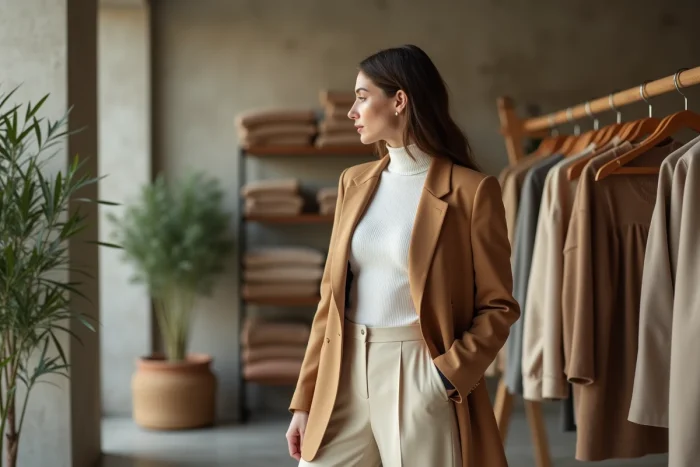
We have all experienced that moment in front of the mirror when a piece spotted online doesn’t fit right, wrinkles in the wrong place, or flattens the silhouette. The fashion trends for 2026 offer generous volumes, layering, and bold colors, but their practical application depends on body shape, daily life, and local climate. Starting from these real-world constraints allows us to sort out what truly works.
Adapting 2026 Fashion Trends to Non-Standardized Body Shapes
Fashion guides list key pieces without specifying how they behave on a short torso, wide hips, or narrow shoulders. We save time by first establishing the constraint.
The hybrid oversized silhouette, noted during the Spring 2026 Seoul Fashion Week according to Vogue Business, works on various body types as long as you create a visible cinching point. On an A-shaped body (hips wider than shoulders), an oversized sweater tucked in at the front into high-waisted pants balances the proportions.
On a V-shaped body, let the volume fall freely at the bottom, opting for a straight cut rather than slim pants that would accentuate the imbalance.
For adaptable layering, which the “Street Style Adaptation Report” from WGSN (February 2026) identifies as a response to urban microclimates, the ground rule is simple: each layer must be able to be worn alone without breaking the look. A structured vest over a flowy dress adds verticality for shorter silhouettes. Conversely, on a larger size, an open short jacket avoids the “tower” effect that a long monochrome coat would create.
To delve into these combinations of pieces and find suitable selections, you can explore the ileoo.net website, which gathers inspirations by style and use.
Trendy Colors and Skin Tone: Choosing Based on Your Skin, Not the Runway
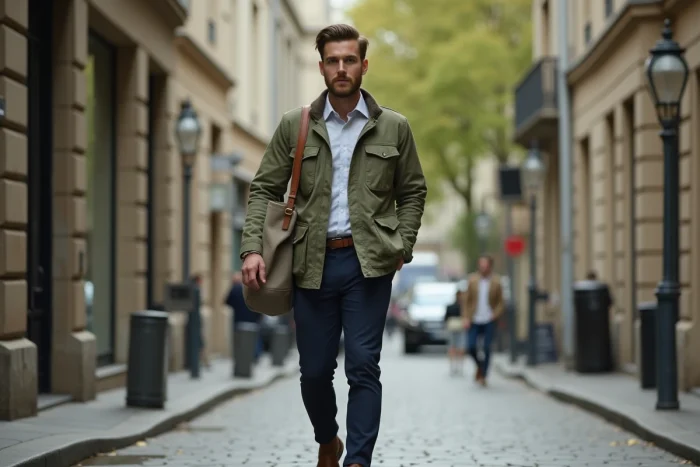
The palettes announced for the season oscillate between saturated shades and natural tones. Pink, butter yellow, and terracotta hues are making a comeback in most selections. The classic trap: buying the “color of the season” without checking if it suits your skin tone.
In practice, we test at least three criteria before adopting a bright color for everyday wear:
- The contrast with the natural complexion: a color that is too close to the skin tone gives a washed-out effect. Powder pink on fair skin can erase the face, while raspberry pink brightens it up.
- Compatibility with the rest of the wardrobe: an isolated trendy piece ends up at the back of the closet. We check that it combines with at least three existing bottoms or tops.
- The effect in natural light: store lighting flatters everything. We take a photo outside, unfiltered screen, to judge the real effect on ourselves.
Neutral colors (beige, off-white, stone gray) remain allies of layered looks. They serve as a binding element between a strong piece and the rest of the outfit, allowing for one trendy color per look without visual overload.
Seasonal Cuts and Textile Labeling: What Changes in 2026
Since January 2026, the European regulation 2025/2487 mandates sustainability labeling on textile fibers. In practice, labels now indicate wear resistance and regenerated or recycled composition. This is not a gimmick: it allows for comparing two similar pieces on the rack before purchasing.
On the cut side, the trend towards wide volumes (loose pants, long skirts, bloomers) raises a practical question for smaller or round body shapes. Volume works when it is balanced by a fitted element: a defined waist, a close-fitting top, or pointed-toe shoes that elongate the leg. Stacking volume on volume without a visual reference drowns the silhouette, regardless of the current trend.
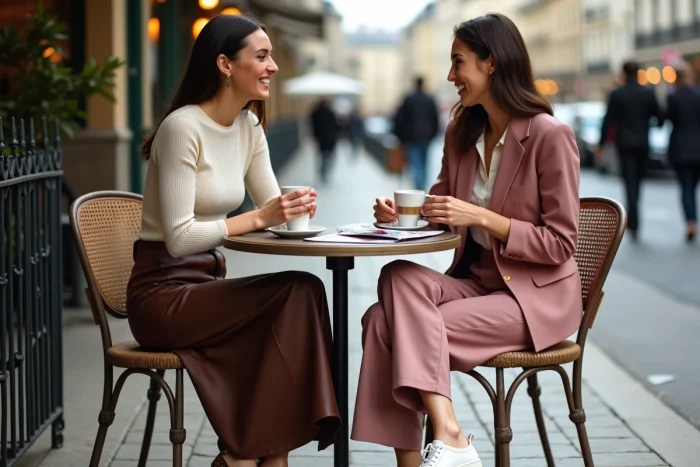
The “Fashion on Climate 2025” report from McKinsey notes the rise of regenerated fabrics made from plastic waste, adopted by brands like Stella McCartney for casual pieces. On the ground, feedback varies on this point: some of these fabrics offer a pleasant fluid drape, while others feel stiffer than classic cotton. Reading the sustainability label helps filter before trying on.
Building a Daily Look with Trends Without Buying Everything New
The reflex to renew an entire wardrobe each season is costly and generates waste. A better result is achieved by integrating fashion trends through a rotation of a maximum of three pieces within an existing wardrobe.
Here’s a concrete method in three steps:
- Inventory the basics already present (straight jeans, plain t-shirt, structured jacket) and identify the gaps: is there a missing colored piece, a voluminous bottom, or a lightweight intermediate layer?
- Choose one strong trend per season that addresses this gap. If the wardrobe is already well-stocked with tops, a textured mid-length skirt or wide pants is enough to update the style.
- Test the piece in three different outfits before finalizing the purchase. If it only works with one look, it doesn’t deserve its place.
Three well-chosen trendy pieces transform a style more than ten impulsive purchases. The selection criterion remains compatibility with what you already wear, not the current buzz.
The fashion trends for 2026 offer rich material, between oversized volumes, saturated colors, and more responsible fabrics. Their everyday translation depends less on the runway than on body shape, the existing wardrobe, and the ability to test each piece in real conditions. The best trend is the one you still wear in six months.