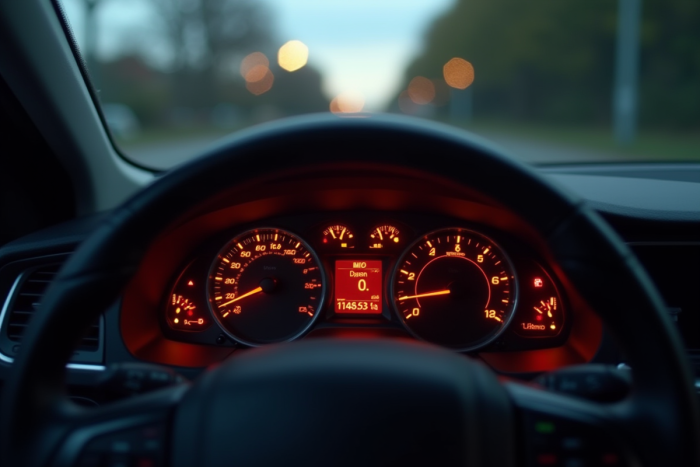
A red warning light that comes on does not always indicate a mechanical emergency, but ignoring this signal can lead to serious consequences. Some icons, although identical from one vehicle to another, reveal very different problems depending on the model or year. Alerts that seem minor at first glance can precede major breakdowns. Understanding the messages displayed by the dashboard directly influences the safety and longevity of the vehicle.
Why dashboard warning lights are much more than just a detail
Forget the idea that the dashboard is just a light decoration. In reality, it is your dedicated watchman, capable of raising the alarm when everything seems to be running smoothly. Beneath its sober appearance, it orchestrates reassuring data and warning signals: oil pressure light, overheating, braking system… Everything is reported, nothing is lost. Every icon has its reason for being. Ignoring a message is inviting a future unpleasant surprise.
Red is a clear alert. Orange is a serious warning. Each color has its level of urgency and vigilance. But the same icon can hide many nuances depending on the car and its year of manufacture. If you encounter any doubt, the resource 206 warning lights allows you to decode these symbols on one of the most common models, clearly explaining what to expect.
The OBD diagnostic tool is part of the recommended toolkit: by connecting this device, you get an accurate reading of error codes. Taking the time to analyze each warning light helps preserve the health of your mechanics and saves you from many disappointments during the technical inspection. The dashboard never speaks for nothing: it embodies prevention and constantly watches over the longevity of your vehicle.
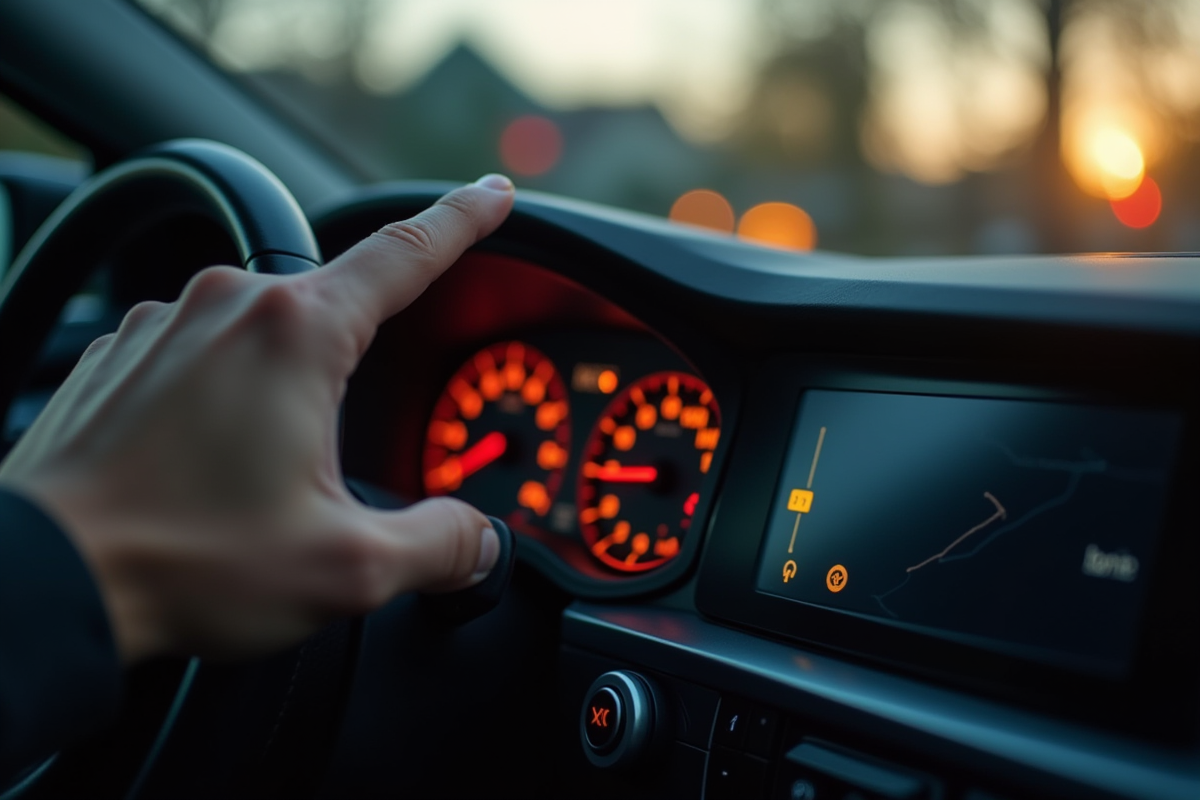
Decoding each signal: what the main warning lights really mean and how to react without panicking
When a warning light appears on your dashboard, chance has nothing to do with it. A red light requires an immediate reaction: oil pressure failure, engine oil level too low, coolant overheating… In these cases, stopping is mandatory. Driving despite this signal could destroy the engine without warning.
An orange light demands active vigilance. An orange engine symbol often indicates an emissions problem, an issue with the particulate filter, EGR valve, or catalytic converter. It is better to consult a professional quickly, before the loss of power complicates the situation further or the breakdown worsens.
To clarify things, here’s what several common warning lights reveal:
- A light indicating brake pad wear or a flashing ABS/ESP/ASR light requires checking the braking system. A visit to the garage ensures that safety remains intact.
- If an icon highlights tire pressure or AdBlue level, it is advisable to check these parameters without delay: these factors affect the car’s stability and its ability to pass the technical inspection smoothly.
- A light related to a engine sensor deserves a scan using an OBD diagnostic tool. This diagnosis avoids unnecessary repairs and precisely targets the source of the signal.
On recent vehicles like the Clio, the dashboard competes with symbols. Behind each of them, there is a clear instruction: act before a technical weakness turns into a serious breakdown. Consulting your car’s manual remains the best reflex to decipher alerts specific to your model.
At the wheel, the most costly mistake is always indifference. Believing that a warning light is not serious is inviting a breakdown. Mastering this dashboard language is choosing the road over the unexpected, reliability over risk, and sometimes, avoiding catastrophe with just a glance.