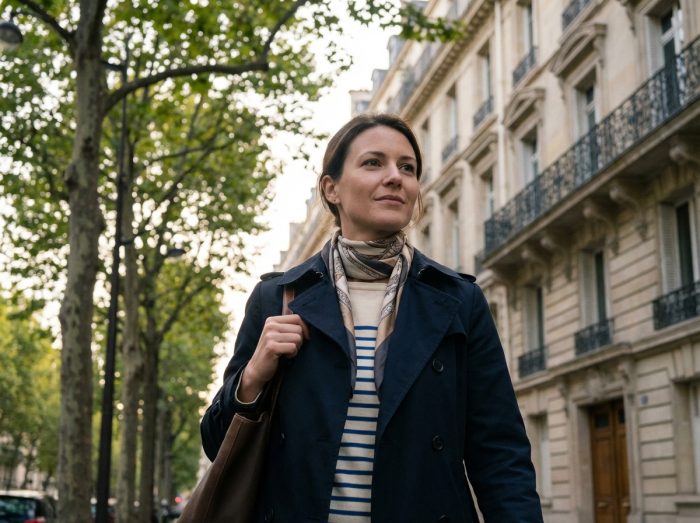
67 billion euros. This staggering figure is the windfall earned by France in 2023 solely from its exports of fashion, perfumes, and all the art of living the French way. A European record, and a striking proof: at a time when the planet often dresses in the same tone, the tricolor touch remains vibrant. It nourishes a whole segment of global luxury and sharpens, more than ever, the curiosity of emerging markets that seek a bit more than the standardized.
Some names that have been etched for generations in the fashion world prefer to maintain stringent requirements, even if it means turning their backs on easy profits. Young brands, on the other hand, are making their mark by boldly claiming values that are sometimes thought to be outdated: a love for fine craftsmanship, a sense of moderation, and attention to every detail.
French Elegance: A Heritage in Motion
French fashion is not just a stylish trend. It relies on a heritage that has been shaped slowly, patiently, century after century. Paris has established itself as a capital of creation where elegance becomes a signature and a boldly balanced playground between creativity and refinement. Fashion designers and historic houses keep the artisanal crafts alive, giving the tricolor know-how a genuine international aura.
Every year, Fashion Week reinvents the score with its share of spectacular shows that bring together centuries-old traditions and a thirst for the new. Behind the scenes, an army of artisans, discreet hands, perpetuates inherited gestures that signify quality the French way: fabrics cut to the millimeter, invisible embroidery, the well-kept secret of the perfect silhouette. From generation to generation, this attention to detail holds the course.
But this culture of style is not static. Young creators are seizing the heritage to transform it. Innovative materials, responsible collections, raised ethical standards: the French scene does not just shine; it adapts to an era that scrutinizes sustainability. Through social networks, influencers showcase this French style characterized by restraint and demand. In this refined discretion lies a singular assertion: wearing French style on the wrist is to claim a blend of history and novelty, attachment to the past and openness to innovation. Hexagonal elegance asserts an identity, a vision, never out of touch, always ready to reinvent itself.
Why does Made in France attract far beyond the Hexagon?
Made in France is appealing both for the label and for what it implies: a commitment, transparency, and a desire to produce on a human scale. Far from globalized production lines, each item tells the story of a choice for quality, careful selection of materials, and traceability down to the smallest detail. French brands forge their image based on their ability to weave a true narrative. This storytelling blends inherited anecdotes and innovations, opening the door to digitalization without sacrificing soul or uniqueness.
Maintaining its difference while adapting to foreign cultures is the specialty of the French touch that resonates in Tokyo as well as in Paris. Over the years, French fashion has cemented trust based on concrete principles: preserving workshops, valuing exceptional know-how, and responding to ecological awareness.
The points that make French manufacturing so sought after can be summarized as follows:
- Tangible authenticity in every creation
- Traceability throughout the entire chain, from raw materials to finished product
- Direct and visible contribution to the local economy
These pillars generate rare loyalty. At a time when transparency is no longer a choice but an expectation, responsibility and proximity become the true compass of the sector. Nevertheless, the industry does not shrink back into the past. Investments in new technologies, hybridization of craftsmanship and digital, exploration of new modes of distribution: French creation continues to move forward, seeking to conquer without ever diluting itself.
The Contemporary Shine of Made in France Elegance
What was once called French elegance is now enriched with unexpected values. Traditional know-how coexists with the expectations of a clientele that scrutinizes traceability and places ecology at the forefront. Short supply chains, local anchoring, local production, and clarity: French fashion shifts from a simple heritage status to an inspiring model of contemporary values.
Examples are multiplying: the choice to relocate part of the production, like Kiplay in Orne, energizes the economic fabric by prioritizing workwear and a vintage spirit. In stores, a significant portion of French consumers is turning away from fast fashion to favor pieces that embody respect for quality and ethics. Made in France fashion thus asserts itself as a driving force of commitment, carrying meaning and attachment to the territory.
Young brands are not lacking in audacity. Maison Château Rouge, Marine Serre: embraced diversity, aesthetics geared towards tomorrow, open castings. Innovation does not chase away demand. Digitalization amplifies the reach of tricolor creativity, while brand narratives modernize tradition: a new story of fashion is being written, in which heritage finally rhymes with invention.
Season after season, made in France elegance allows for all evolutions, without ever losing its distinctive strength. And perhaps it is precisely this ability to remain true to itself while moving forward that makes it irresistible. The future of tricolor chic is just beginning, and now it is up to everyone to follow its transformations.